
How “Who Am I?” Teaches Us About Our Teens
By Sahira Dharamshi.
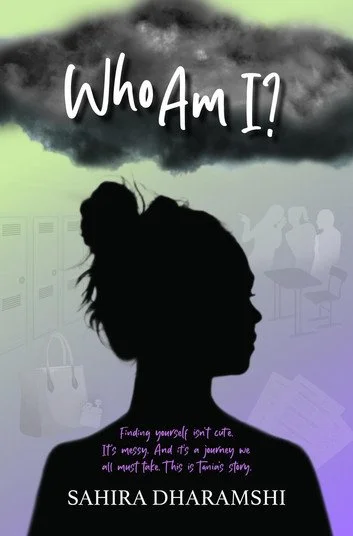
Children spend hours at school each day, living a life that you see in glimpses. You may live under the same roof, but your lives aren’t constantly intertwined. Within those hours they’re away, so much happens. And whilst you can’t know all the minor details, creating a space for open conversations can help keep you in the know of how they’re really doing. The key to relationships really is communication.
However, it’s rarely as simple as it sounds. The translation of it from paper to reality is riddled with difficulties that we don’t have the answers on how to navigate. For me, that’s one of the key themes I wanted to explore in my debut novel, Who Am I?
The story follows Tania Evergreen during her final year of high school. Like many of us, she keeps so much to herself out of fear - fear of being judged, fear of how others will perceive her, and fear of what might happen if someone doesn’t understand her.
Tania navigates anxiety, an eating disorder, and the complicated dynamics of school, friendships, and family. She finds herself in search of the answer to one defining question: “Who Am I?”
There were different relationships to explore, friendships, students and teachers, and parents and their children. Having only been a child, and with my focus on youth mental health, I could only write from one perspective.
For many children, it can be difficult to communicate the complicated emotions that come with going through adolescence. In Who Am I? you see that dynamic between Tania and her parents. You get to have an insight into Tania’s mind and the thoughts she’s grappling with: Worrying about letting her parents down, fear of failing them, trying to predict what they’ll think of her. As a reader, you’ll probably be rooting for her, willing her to just say the words that live rent-free in her mind. But you’ve probably been in a similar situation at some point in your life. And there’s been a tipping point that finally gets you to admit the thoughts out loud, and sometimes you’ll be surprised by reactions you’re met with, and other times you won’t be. But in your homes, you can create environments that are open. You can keep the door to those difficult conversations always ajar, ready to be pushed open and entered by whoever needs it first.
These conversations don’t always need to be carefully planned. They can begin by simply asking about their day on the car ride home, during dinner, or even having a catch up before bed. You can try ask open-ended questions that leave room for children to elaborate and show that you’ve got the time to sit and listen to what they’re saying. Children don’t always need a solution right away; sometimes they simply need someone to listen to what thoughts have been circling their mind and a shoulder to lean on as they try to figure things out.
In some moments, it might be messy. You might not always understand each other and say something wrong. There may even be some shouting, and possibly tears. But, if you’re able to have patience, work through the messiness and understand each other’s perspective, you can then work towards getting the right support your child may need.
I often say it’s important for children to have patience with their parents, as much as it is for parents to have patience with their children. At times, as children are navigating things for the first time, so are their parents. We like to put superhero capes on our parents, that they have a magical ability to automatically be experts in everything. And whilst that’s a wonderful view to have, I think we also need to give them grace when they’re learning about terms they couldn’t give the time to growing up. Whilst mental health has always existed, it’s slowly getting life breathed into it in recent years. So, phrases like anorexia, depression, OCD, ADHD still have an unfamiliar roll on the tongue to many.
You might not have all the answers to every problem your child presents, and that’s okay. What’s more important is having the patience and willingness to listen to them, create a safe space in which they feel able to open up, and be ready to learn how to best support them.
Although Who Am I? is marketed as a young adult novel, I hope readers of all ages pick it up and recognize something of themselves, or someone they love, within its pages. I hope the story reminds individuals that they're not alone in their struggles; there is always somebody out there who can relate.
For parents, I hope it offers a little glimpse into the thoughts and anxieties a young person may find difficult to convey, and showcases the importance of listening without judgement. When something becomes too difficult to carry alone, don’t hesitate for a second in reaching out for support. That in itself is a sign of strength and courage. If the first person doesn't understand, keep searching until you find someone who does. Another person's opinion shouldn't have the power to determine how you see yourself. Always remember to be in your own corner - and encourage those around you to do the same.

About the author: Sahira Dharamshi is a writer, journalist, and author whose work has appeared in magazines and online platforms covering culture, mental health, wellbeing, and lifestyle. She is also the founder of the upcoming digital platform, Simply Becoming You, dedicated to helping people navigate personal growth and self-discovery.
Who Am I? is her debut young adult novel, exploring identity, belonging, mental health, and the pressures of growing up with empathy and authenticity. The novel reached #1 on Amazon in both the UAE and the UK and is available in Magrudy's bookstores across the UAE.