
From flavoured yoghurt to lunchbox crackers, the UAE is introducing new limits on sugar, salt and fat in everyday foods. A Dubai-based paediatric dietitian explains what this means for families and shares five simple food swaps worth trying.
We all want our children to eat well. But between school lunches, after-school snacks and the occasional supermarket dash, making healthy choices isn't always straightforward.
And while most of us know that too many sweets and crisps aren't ideal, what about the foods we assume are healthy? Flavoured yoghurt, breakfast cereals, cheese sandwiches and even some snack bars can contain more sugar, salt or saturated fat than we realise.
The good news? The UAE is taking steps to make healthier choices easier for families.
In October, the government announced new regulations to gradually reduce sodium, sugar and fat in selected packaged foods, including bread, sweetened milk drinks, flavoured yoghurt and laban, salty snacks and processed cheese.
With the Dubai Fitness Challenge encouraging families to get moving this November, it's also a good opportunity to look at what's on our plates.
But what do the new rules actually mean for our children? And should we be changing what goes into their lunchboxes?
We asked Aisling Oslizlok, paediatric dietitian at Genesis Dubai, to help us make sense of it all.

✦ Why Is the UAE Making These Changes?
Childhood obesity is a growing concern, including here in the UAE. And while there are many factors involved, what children eat regularly plays an important role in their long-term health.
According to Oslizlok, the new regulations are a welcome step towards making everyday foods healthier.
“Stricter limits are not about labelling foods as ‘good’ or ‘bad’. They aim to improve the nutritional quality of everyday products and make healthier choices easier for families.”
And that’s an important point. Rather than expecting parents to scrutinise every ingredient on every label, the changes aim to improve the foods already available on supermarket shelves.
Reducing added sugar can help protect children’s teeth, while less salt can help them develop a preference for less salty foods. Reducing saturated and trans fats can also support healthier eating habits.
✦ So, What’s Actually Changing?
The new rules introduce phased limits on certain ingredients in some familiar products:
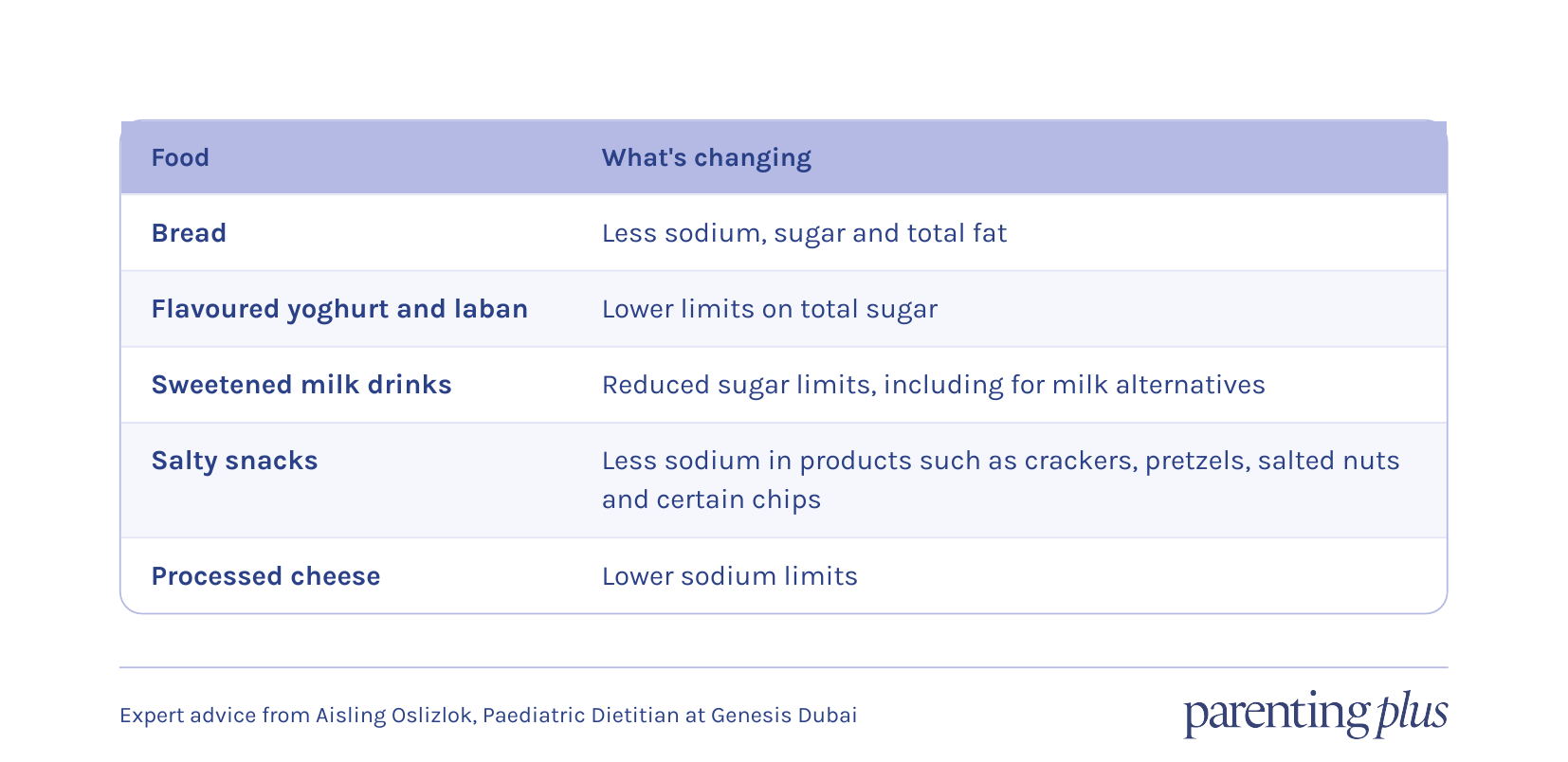
These changes won’t happen overnight. Food businesses have different deadlines depending on the product, with final limits to be met by 31 December 2030.
So, while manufacturers work towards these targets, there are a few things parents can do right now.
✦ The Foods That Might Surprise You
Here’s where things get interesting.
It’s not always the obvious treats we need to pay attention to.
Oslizlok says sugar can be found in surprisingly high amounts in flavoured children’s yoghurt, breakfast cereals, cereal bars, smoothies, juice drinks and even ketchup.
Salt can add up in processed cheese, crackers, instant noodles, sauces and processed meats.
And foods such as croissants, biscuits, pizza and fried snacks can be high in saturated fat.
Does that mean we need to ban all these foods? Absolutely not.
“Children do need some fat for growth and development. We do not need to remove fat completely,” Oslizlok explains.
It’s about finding a better balance and making small changes where we can.
She also reminds parents not to be fooled by packaging. Just because something is labelled organic, imported or made for children doesn’t automatically make it healthier.
A useful shopping tip: Compare similar products using the nutritional information per 100g or 100ml. It’s a simple way to spot differences in sugar, salt and saturated fat.
✦ Five Easy Food Swaps for UAE Families
Before you start rethinking your entire grocery list, there’s no need to make drastic changes.
Oslizlok suggests starting with a few affordable swaps that still feel familiar to children.
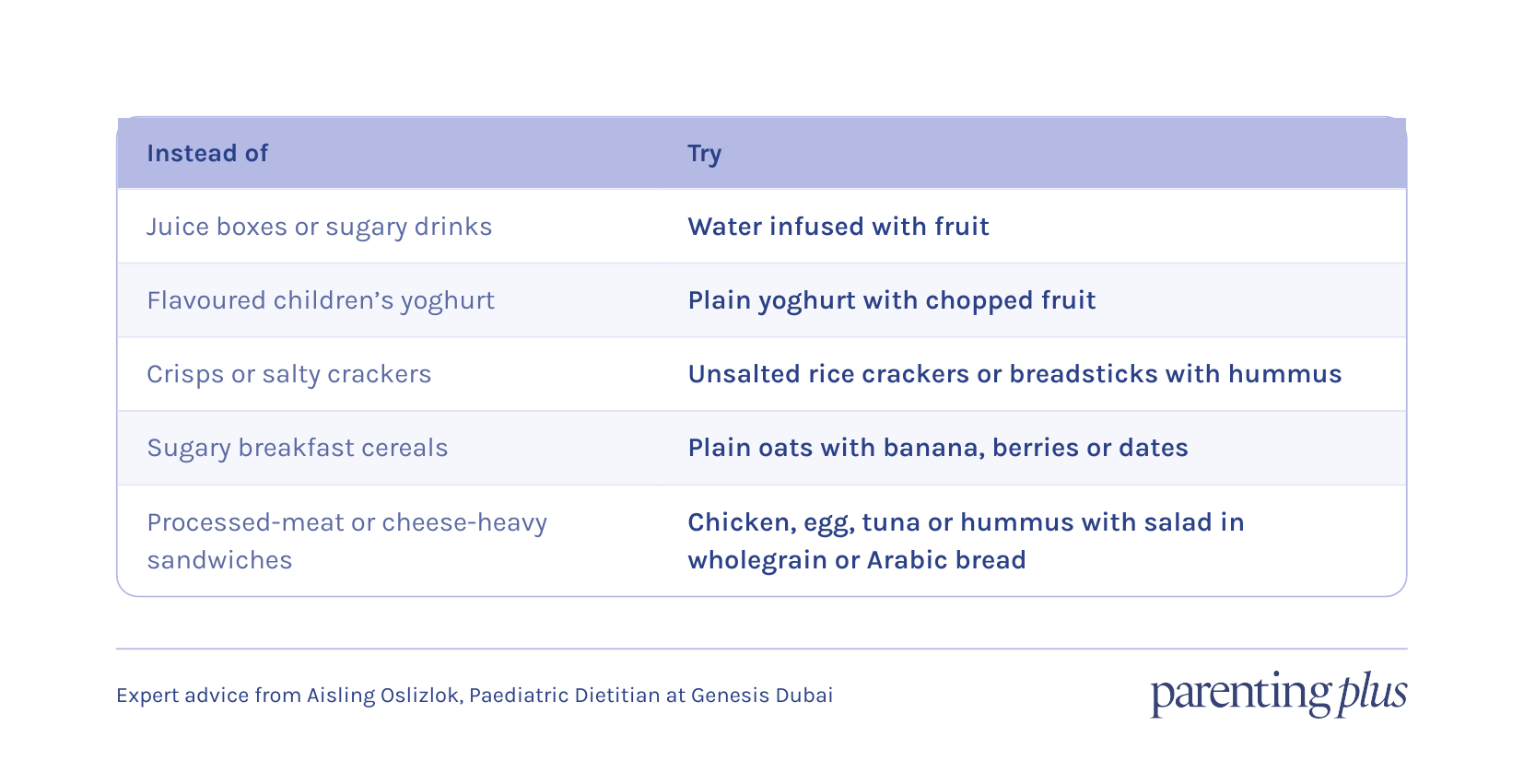
You don’t have to change everything at once.
If your child loves chocolate cereal, for example, try a lower-sugar version and add some fresh fruit.
The goal isn’t to take away everything children enjoy. It’s to make their everyday favourites a little healthier.
✦ And What About Our Picky Eaters?
Of course, all these suggestions sound wonderful until you’re faced with a child who refuses anything green!
Oslizlok’s advice? Take the pressure off.
Children often need to see and explore a new food several times before they’re comfortable eating it.
Try offering a tiny portion of something new alongside a familiar favourite. Let them help wash vegetables, prepare fruit or assemble their own wraps.
Even giving them a choice between carrots and cucumber can help them feel involved.
And if dinner doesn’t go according to plan? Don’t worry too much about one meal. Look at what your child eats over the course of a week.
If eating difficulties are persistent or affect your child’s growth, nutrition or wellbeing, seek advice from a registered paediatric dietitian.
✦ A Healthier Family Doesn’t Need a Perfect Lunchbox
As families take on the Dubai Fitness Challenge, it’s worth remembering that healthy habits are built both through movement and what we eat.
But healthy eating doesn’t have to mean expensive ingredients, elaborate lunchboxes or never having birthday cake again.
As Oslizlok puts it: “A good diet for your child does not have to mean expensive foods, perfect lunchboxes or banning treats.”
Her advice is simple: start with one or two realistic changes and build from there.
Because ultimately, it’s what our children eat most of the time that matters, not the occasional treat.
And that’s something every family can work towards, one small swap at a time.
Expert advice provided by Aisling Oslizlok, Paediatric Dietitian at Genesis Dubai.