
STEM without a screen: why hands-on science beats tablets early on
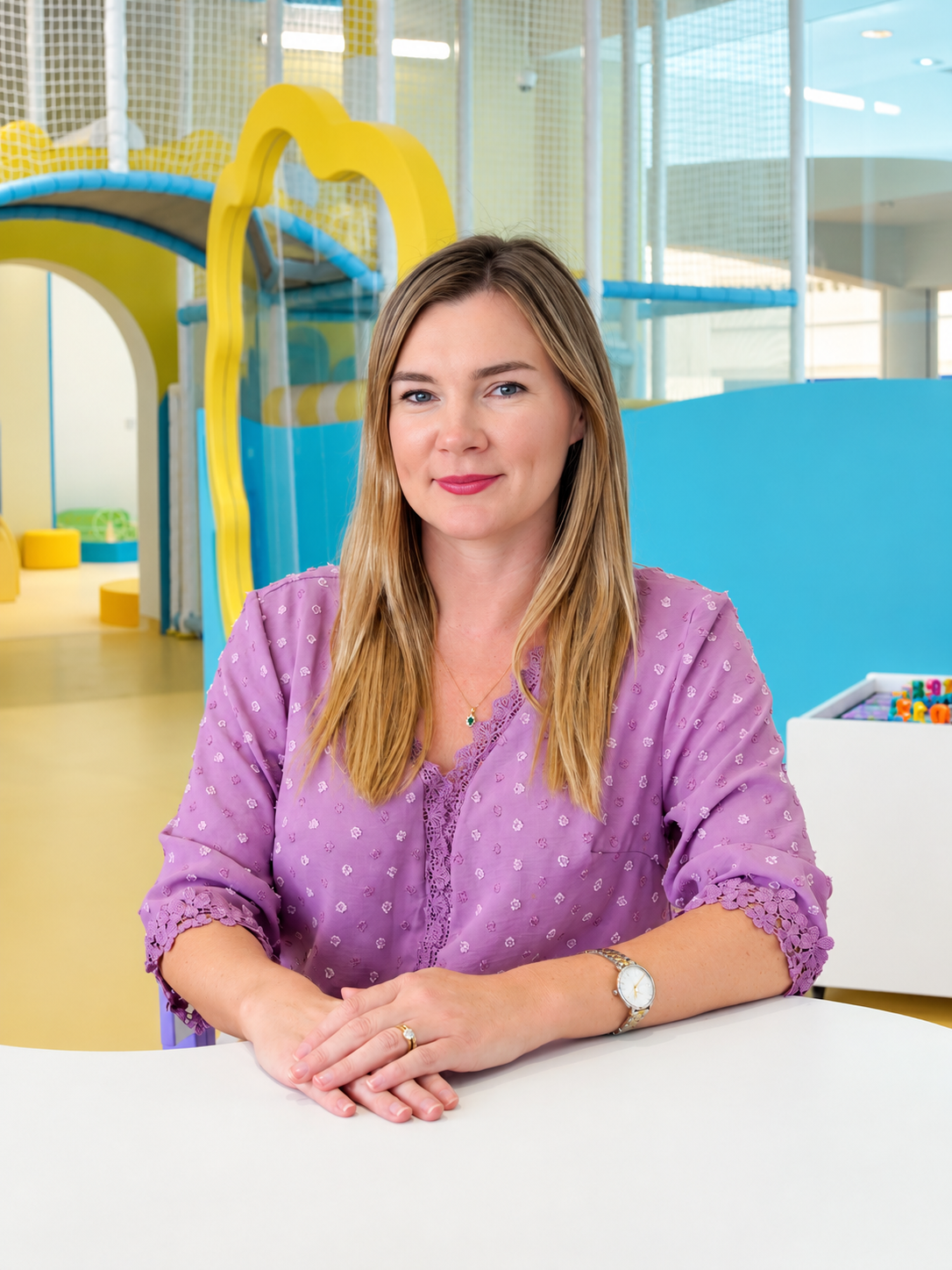
BY : Jennifer Hogan - Director of Family Entertainment, Hattan Group / Lemonade Play
✦ The STEM Lab Was There All Along
We have become very good at making childhood look educational.
There are Early STEM apps, coding toys, science subscription boxes, educational platforms and carefully designed extracurricullar activities promising to turn play into learning. And while technology undoubtedly has a valuable place in children's lives, I sometimes wonder if we have overlooked something much simpler.
Children have always played scientiifically. It’s innate.
Long before we started putting the STEM label on activities, children were mixing mud, building sandcastles, making dams, collecting stones, taking things apart and asking, “What happens if…?”
That question is the beginning of science.
My background is in biotechnology, and I have spent much of my career working at the intersection of science, education and children's play. One thing I have come to appreciate is that meaningful learning is rarely about simply receiving information. It is about interacting with the world.
For young children especially, that interaction is physical.
They need to make, create, design, manipulate, test and try again.
Think about the humble mud kitchen.
A few pots, spoons, containers, soil, leaves and water might look like pretend play. But watch a child closely and there is an extraordinary amount of scientific thinking taking place.
What happens when dry soil meets water? How much water is enough? Why does one mixture pour while another holds its shape? What happens if I add more? Which container holds the most?
The child is exploring volume, weight, absorption, texture, viscosity and cause and effect. They are selecting materials based on what they think those materials might do. They are testing ideas and changing their approach when the result isn't what they expected.
And then there is the design process.
✦ Make. Test. Adapt. Try again. photography
That is engineering.
The same thing happens at the beach.
Give a child a bucket, a spade, sand and water and they have an enormous STEM laboratory at their disposal.
A sandcastle becomes an exercise in material science and structural engineering. Which sand makes the strongest tower? How wet does it need to be? Why does one castle stand while another collapses?
Then comes the moat.
A child digs around their castle and pours water into the trench. But the water doesn't politely stay where they put it. It finds the lowest point and starts to move.
So the child digs.
Perhaps they make a channel connecting the moat to the sea. Perhaps they build a little dam to stop the water. Perhaps the dam fails and they rebuild it.
They have just started investigating water flow, gravity, gradients, permeability and erosion.
They might create a river and experiment with its shape. Make it wider. Make it narrower. Add a slope. Build a barrier.
✦ Nobody needs to tell them they are doing hydrology.
They are simply trying to solve a problem.
This is what I mean when I talk about the importance of the making and designing process in early childhood learning.
The materials themselves become teachers.
Sand behaves differently from water. Clay behaves differently from cardboard. A wooden block behaves differently from fabric. An elastic band stretches. A stone has weight. A magnet attracts some materials and ignores others.
Children learn these properties through their bodies.
They push, pull, lift, squeeze, pour, balance, connect, separate and rearrange. They experience resistance, movement, weight and transformation.
This is kinaesthetic learning: understanding through physical interaction and movement rather than simply being told something or watching it happen on a screen.
A screen can show a child what happens when water flows downhill. A child can understand something quite different when they have dug a channel themselves, poured in the water and watched it choose its own path.
A video can demonstrate balance. A child who has spent twenty minutes trying to stop their tower collapsing has felt balance.
An app can ask a child which object is heavier. A child who has carried two different buckets has experienced weight.
The physical world gives children something a screen cannot fully replicate: consequence.
When their tower falls, they know it fell.
When their dam breaks, they see the water escape.
When they add too much water to the mud, they feel the mixture change.
There is immediate feedback, and that feedback drives the next question.
This is also why open-ended materials are so powerful.
When we give children a finished toy designed to do one particular thing, we have already made many of the decisions for them. But give them cardboard, tape, tubes, fabric, blocks, containers or loose parts and suddenly they have to decide what those materials could become.
That is creativity, but it is also critical thinking.
There is no single correct answer.
And perhaps this is where the conversation around screens can become unnecessarily binary. I am not anti-technology. Technology can be an extraordinary tool for learning when it is used intentionally and appropriately.
✦ But technology should be a tool within a child's world, not the world itself. And certainly not, the motivation.
Young children need to experience the physical properties of the things they are trying to understand. They need social interaction, movement, sensory experiences, experimentation and the freedom to pursue an idea that might not work.
Especially in the UAE, where outdoor time can become more challenging during the hotter months, there is a temptation to equate indoor entertainment with digital entertainment.
We don't have to.
An indoor environment can be a laboratory, workshop, art studio, construction site or miniature world. A collection of interesting materials can be more intellectually stimulating than a perfectly packaged activity because it leaves room for the child to decide what happens next.
And that may be the most important part.
We don't necessarily need to make childhood more educational.
We may simply need to get better at recognizing the education that is already happening.
The mud kitchen was a science lab.
The sandcastle was an engineering project.
The beach was a physics experiment.
The child building a cardboard creation, watching it collapse and deciding to try again was practicing the same process that scientists, engineers and designers use every day.
They were curious. They made something. They tested it. They changed it. They tried again.
Perhaps the real opportunity isn't to find more ways to teach STEM to children.
Perhaps it is to give them more opportunities to just do it.
