
If you’re a sleep-deprived parent, read this
Parents can spend an extraordinary amount of time thinking about sleep — just usually not their own.
From wake windows and nap schedules to bedtime routines, night feeds and sleep regressions, there is no shortage of advice about how to help babies and children sleep better. Yet behind many of those conversations is a parent who is exhausted, waking several times a night, functioning on caffeine and trying to convince themselves that this is simply what parenthood looks like.
Sleep expert Julie Mallon thinks we need to talk about that part too.
“I think this is such an important conversation because we speak endlessly about babies’ sleep, but very rarely about all the exhausted parents I have seen over the years, standing beside the cot.”
Some level of disturbed sleep is, of course, inevitable, particularly in the early months. Babies need to feed frequently, their circadian rhythms are still developing and they rely heavily on parents for comfort and regulation. But Julie is keen to make the distinction between accepting the realities of early parenthood and treating chronic exhaustion as something parents are simply expected to endure.
How much sleep are parents actually losing?
There is no single figure that applies to every family. The age of the child, feeding arrangements, number of children and individual family circumstances all make a difference, but the data does give us an idea of the scale of the problem.
Julie points to a large longitudinal study involving more than 4,600 parents, which found that sleep was at its lowest during the first three months after birth. Mothers were sleeping approximately one hour less each night than before pregnancy, while fathers lost around 13 minutes.
Perhaps even more strikingly, parents’ sleep had still not completely returned to pre-pregnancy levels six years after the birth of their first child.
But Julie says focusing only on the number of hours can be misleading because, for parents, fragmentation is often just as important.
“For parents, it is very often the fragmentation of sleep that is so debilitating. Six or seven hours broken into pieces is physiologically very different from six or seven hours of consolidated sleep.”
Adult sleep moves through cycles of roughly 90 minutes, progressing through lighter sleep, deep sleep and REM. When those cycles are repeatedly interrupted by feeding, settling, checking on a child or simply being alert to every small sound, the body may not get the same restorative benefit.
As Julie explains, “You may technically have ‘slept’, but you haven’t necessarily had the opportunity to move naturally through the architecture of sleep that allows the brain and body to restore themselves.”
That probably explains why so many parents can look at the clock, calculate that they technically had six hours, and still feel as though they barely slept at all.

Mum and dad need their Zzzzs too.
Julie Mallon is a sleep consultant based in Dubai. her advice to all parents:
“Please stop treating your sleep as the leftover part of your day.”
Parenthood changes the way we sleep
The obvious reason new parents sleep less is that babies wake. But that is only part of the story.
Julie says parenthood also changes the brain’s responsiveness. Sounds that once would have gone unnoticed can suddenly wake us immediately: a tiny movement, a cough, a change in breathing. Pregnancy, birth, feeding and hormonal changes can add another physiological layer, particularly for mothers.
Then there is the mental load, which does not necessarily disappear just because the baby is asleep.
“Did she feed enough? Is he warm? What time did she last wake? Do we have nappies? What am I doing tomorrow?”
Julie sums it up perfectly: “The baby may be asleep, but the parent’s brain has not necessarily received the memo.”
This is why the old advice to “sleep when the baby sleeps” can feel frustrating rather than helpful. The opportunity to sleep does not always mean the ability to switch off, particularly when parents are already overwhelmed, overstimulated or carrying a long list of things that still need to be done.
The 3am problem: too much advice
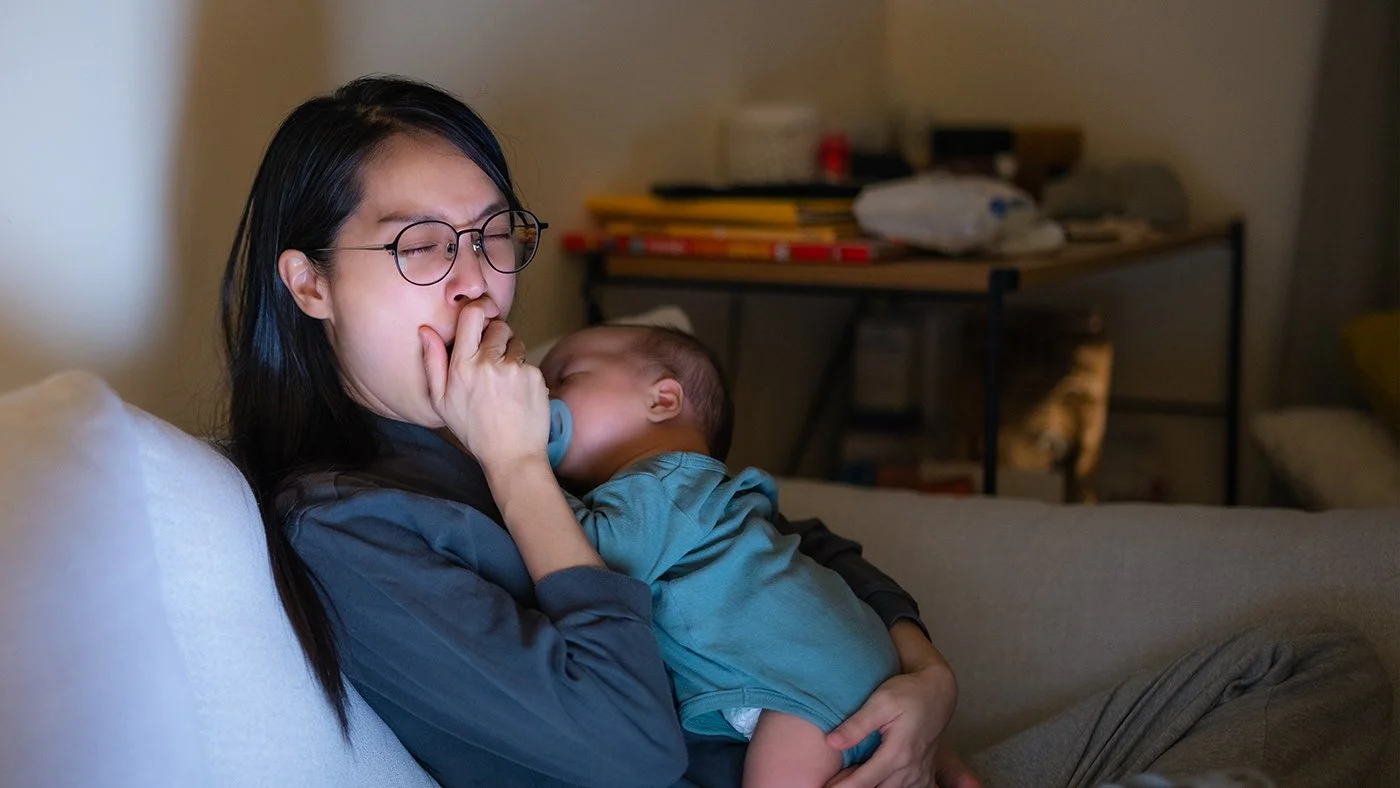
There is also another form of exhaustion Julie believes modern parents are experiencing: information exhaustion.
At 3am, when you are tired and searching for reassurance, social media can offer hundreds of competing opinions within minutes.
“Sleep coach or absolutely no sleep coaching. Co-sleep or never co-sleep. Respond immediately or pause. Follow a schedule or follow your baby’s cues.”
Julie says the result can be that parents lose confidence in their own judgement because somebody online always seems ready to tell them they are doing it wrong.
“We don’t need to parent according to the loudest voice on Instagram. We need good evidence, an understanding of our individual child, and the confidence to make decisions that work safely and compassionately for our own family.”
She also believes we need to be careful about romanticising sleep deprivation in the name of responsive parenting.
“A child who is consistently not getting sufficient sleep cannot function at their biological best. And an exhausted parent, however loving and committed, will find it harder to access the patience, emotional regulation and perspective that parenting asks of us. That is not judgement. It’s biology.”
That distinction matters. Protecting your own sleep is not about becoming a more perfect parent; it is about recognising that patience, attention, emotional regulation and sound decision-making all become harder when the brain is chronically tired.
Can you ever catch up on lost sleep?
To a degree, yes. Recovery sleep has value, and a longer night after a particularly bad one can certainly help.
But Julie warns against thinking of sleep as something we can continually borrow from during the week and completely repay at the weekend.
“Sleep isn’t quite a bank account where we can continually overdraw Monday to Friday and simply repay everything at the weekend.”
Research into chronic sleep restriction suggests that one or two longer nights do not necessarily restore all the effects of accumulated sleep loss, particularly when it comes to attention and cognition.
That is why Julie encourages parents to focus less on waiting for one perfect night and more on protecting sleep whenever they realistically can.
“One earlier night. Sharing a feed or wake where possible. A strategically timed nap. Choosing sleep occasionally instead of another hour scrolling, working or clearing the kitchen.”
Even small amounts can matter when they are repeated consistently. For parents in a season where eight uninterrupted hours simply are not realistic, finding another 15 minutes here and there may be far more achievable.
Stop treating your sleep as the leftover part of the day
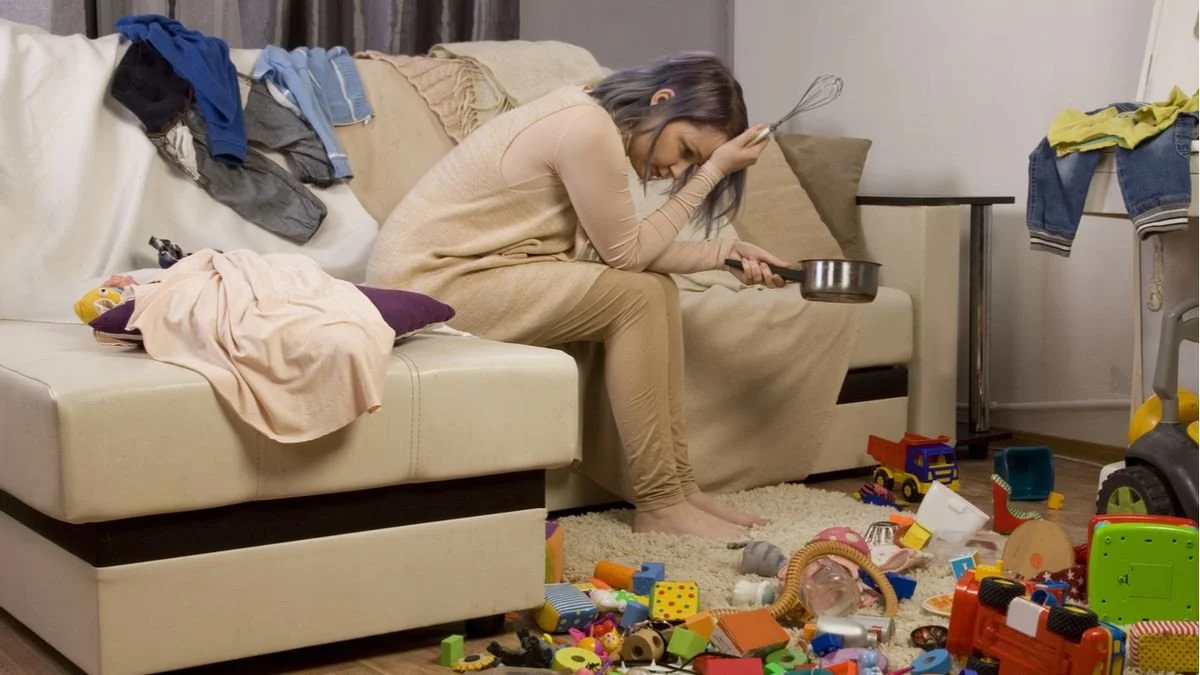
This is Julie’s biggest piece of advice, and perhaps the one most parents will recognise immediately.
“Please stop treating your sleep as the leftover part of your day.”
Once the children are finally asleep, many parents begin what feels like a second shift: emails, laundry, tidying, preparing lunches, answering messages, catching up on work or simply watching something because it is the first quiet hour they have had to themselves.
Julie completely understands why parents protect that time, but says repeatedly borrowing it from sleep eventually has consequences.
Her advice is deliberately realistic rather than perfectionist. Protect an earlier bedtime two or three nights a week instead of expecting yourself to do it every night. Get outside into natural morning light, which helps anchor the circadian system. Move your body, even if that only means walking with the buggy. Use caffeine strategically rather than continually, especially later in the day.
And where family circumstances allow it, share the load.
“If you have a partner, do not automatically have two exhausted adults awake with one baby. Divide and conquer where your circumstances and feeding allow.”
There is also a simpler permission that many parents may need to hear: sometimes going to bed is more important than folding the washing.
Do sleep gadgets actually help?
Julie is refreshingly sceptical about the idea that better sleep necessarily requires buying something.
“I am quite deliberately boring about this!”
Her priorities are far less glamorous: a comfortable mattress and pillow, a cool and dark bedroom, and reducing unnecessary light.
Wearables and sleep trackers can be useful for identifying patterns, but she cautions against becoming fixated on sleep scores.
“A device is estimating your sleep; it isn’t experiencing your body.”
If a tracker encourages you to make useful changes, it can be helpful. If you wake feeling reasonably good and immediately become anxious because your watch tells you that you slept badly, Julie says it has probably stopped serving its purpose.
You may feel used to being tired. Your body isn’t.
One of the more surprising points Julie makes is that people can become accustomed to feeling tired without actually becoming physiologically adapted to sleep deprivation.
Parents often say, “I’m fine on five hours now,” and may genuinely feel as though they have adjusted. But chronic insufficient sleep can still affect attention, decision-making, emotional regulation and reaction time.
That is particularly relevant to parenting because, as Julie points out, those are exactly the skills we rely on every day.
“We need patience, perspective, emotional regulation and the ability to respond rather than react, usually at precisely the moment we are most tired.”
Protecting parental sleep, therefore, is not indulgent. It is part of caring for the whole family.
So when does it actually get better?
Julie is careful not to give parents one magical age because babies develop differently and sleep is rarely perfectly linear.
Newborn sleep is supposed to be fragmented, and parents should not feel they have failed because a very young baby does not “sleep through”. Over the first few months, circadian rhythm develops, feeding becomes more established and sleep gradually begins to organise differently.
For many developmentally ready babies, around five to six months can offer more opportunity to support independent sleep skills in a responsive and compassionate way. Even then, illness, teething, travel, developmental changes and separation can temporarily disrupt sleep again.
So rather than counting down to a particular month, Julie encourages new parents not to look too far ahead.
“You don’t need to survive the next six months today. You need enough support to get through tonight, and then tomorrow.”
Perhaps that is the most useful way to think about parental sleep in general. There will be difficult nights and periods when sleep simply is not within your control, and there will absolutely be moments when comfort and connection matter more than routine.
But grace does not have to mean accepting chronic exhaustion as the price of being a good parent.
As Julie puts it, “Sleep is not a luxury. It is a biological necessity, for our children and for us.”
The aim is not perfect sleep or perfect parenting. It is something much more realistic: a well-rested-enough family.
Julie Mallon is a UK-qualified nurse, midwife and health visitor, and a certified Gentle Sleep Coach through The Gentle Sleep Coach Program, one of the world's most comprehensive sleep coaching certifications. With more than 30 years of experience, she is recognised as one of the Middle East's leading sleep experts.
