
IVF in the UAE: An Honest Conversation With Cassie Destino

When we set out to properly cover IVF for UAE families, we knew the missing piece wasn't more information. It was someone who had actually lived it. Cassie Destino has spent close to a decade being that person for others. Below is a real conversation with her, in her own words: her own path through fertility treatment, the realities of pursuing IVF in the UAE, and the guidance she now gives as a certified Fertility Doula and founder of IVF Support UAE, the region's largest fertility support community. This isn't a clinical brochure. Some of it is hard to read. Most of it is genuinely reassuring.
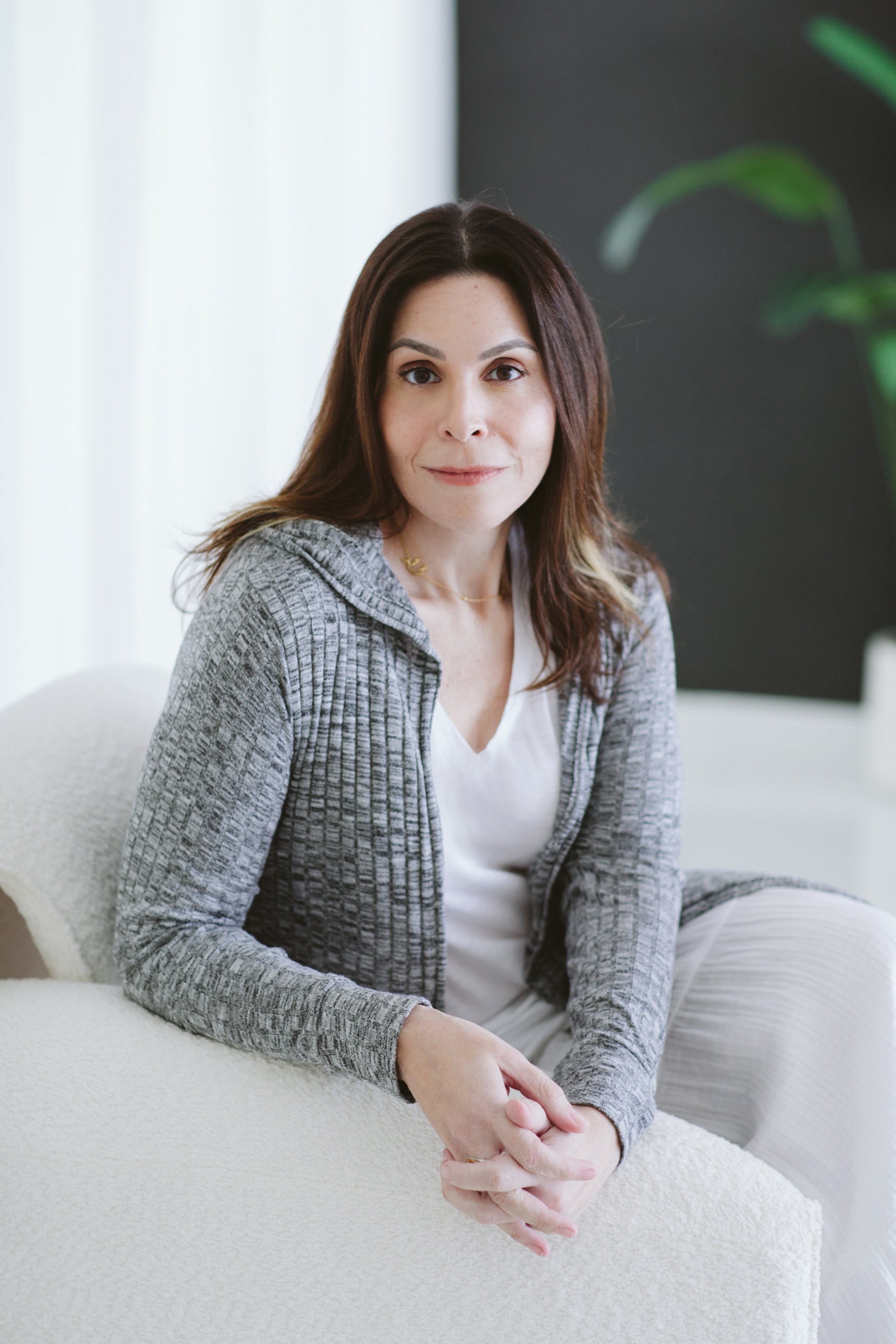
Can you tell us about your own fertility journey, what led you to start IVF Support UAE, and a bit about your training and role as a Fertility Doula?
My husband and I started trying for a baby in my late 30s, and I had a feeling early on it might not be straightforward. After speaking with thousands of women since, I've learned many people describe that same instinct.
At the time we were living in San Francisco, where we began fertility treatment. We went through four unsuccessful IUI cycles before moving to IVF in summer 2014, when I was 38. That first cycle resulted in a pregnancy, but I miscarried around 12 weeks. Less than ten days later, we relocated to Abu Dhabi and had to start again.
The fertility landscape in the UAE was very different then, with far fewer clinics and options than today. We found a small fertility unit within a hospital and underwent two more IVF cycles. The first resulted in a chemical pregnancy, where the test is positive but the pregnancy doesn't continue. Our third cycle finally brought us our now 10-year-old twins.
Going through infertility as a new expat highlighted something I hadn't appreciated before: how isolating fertility treatment can be far from your support network. I understood the medical process, but I didn't have anyone who truly understood what I was experiencing, or who could help me navigate care in a new country.
That experience led me to found IVF Support UAE in 2016. What began as a small Facebook group has grown into the UAE's largest fertility support community, connecting thousands of women with reliable information, emotional support, and each other.
As the community grew, I wanted to offer more than peer support, so I became a certified Fertility Doula. Today I work one-on-one with individuals and couples, helping them understand their diagnosis, choose the right clinic and doctor, prepare for treatment, and feel supported through what can be an overwhelming process.
"Supporting people through fertility treatment has become a career and purpose I never could have imagined when I first began my own journey. It is a privilege to walk alongside individuals and families during one of the most significant and vulnerable chapters of their lives."
For hopeful parents who are new to this, can you give a quick overview of what IVF actually involves, and what's different or unique about pursuing it specifically in the UAE?
In broad strokes: IVF starts with a consultation and tests to understand what's going on, then a cycle of fertility medication, usually self-administered injections, to help your ovaries produce multiple eggs. Those eggs are collected in a short outpatient procedure, fertilised in the lab, and the embryos are monitored before one is transferred back, fresh or frozen. About 10–14 days later, a blood test tells you whether it's worked.
In the UAE specifically: IVF treatment is generally available to married couples using their own eggs and sperm. Donor eggs, donor sperm, and donor embryos are not permitted under current regulations, so your doctor will discuss the treatment options available within these guidelines.
What's the first thing you tell someone who's just found out they'll need IVF?
The first thing I would say is: don't panic.
Hearing you need IVF can feel overwhelming. It's completely normal to feel shock, sadness, fear, or even relief at finally having a plan. Give yourself time to process it.
The good news: there are more options available today than ever, and the UAE has world-class fertility specialists and clinics. You're in good hands.
Try not to compare your journey to someone else's. Every diagnosis, treatment plan, and path to parenthood is different. Focus on your own situation, ask questions, and take things one step at a time.
What are the most common misconceptions about IVF you encounter in the UAE?
✦ Misconceptions Worth Retiring
That IVF guarantees pregnancy. It significantly increases the chances of conception, but success depends on age, diagnosis, and embryo quality, and sometimes takes more than one cycle.
That infertility is a punishment for waiting too long or prioritising a career. It's a medical condition with many causes, most outside a person's control. The guilt so many carry is rarely justified.
That clinics will take advantage of patients or push unnecessary treatment. It's fair to ask questions and seek a second opinion, but the UAE has many highly qualified specialists providing genuinely world-class care.
That IVF is only about the woman. Fertility is a shared issue. Male factor infertility accounts for a significant share of cases, and assessments should look at both partners from the start.
What questions do you wish every patient felt empowered to ask their clinic, that most people forget to ask?
Patients are active participants in their own care, it's okay to ask questions, and a good specialist will welcome them. Some of the most important ones to ask:
✦ Questions Worth Asking Your Clinic
What are all of my treatment options? IVF is excellent for many people, but it isn't the only option for everyone. Ask your doctor why they're recommending a particular treatment and whether alternatives exist.
Why are you recommending this approach for me? Treatment is highly individualised, and understanding the reasoning helps you feel more confident.
What can I be doing now to improve my chances? Ask if there are evidence-based steps, health, supplements, lifestyle changes, you can take before or during treatment.
What should I realistically expect? Understanding the likely timeline, success rates for someone with your diagnosis, and what happens next if this cycle isn't successful helps set realistic expectations.
The more you understand your diagnosis and treatment plan, the more empowered you'll feel. There's no such thing as a silly question in fertility care.
What's different, practically, culturally, or emotionally, about going through IVF as an expat here, away from family and long-time friends?
Going through IVF as an expat can be a very different experience, navigating one of the most emotional periods of your life without the support network you'd normally have close by. Being away from family and lifelong friends can make it feel incredibly isolating.
At the same time, there can be an unexpected sense of freedom, a little distance from well-meaning relatives who constantly ask for updates or unintentionally add pressure. It lets you decide who you share your journey with, and when. That's part of why communities like IVF Support UAE matter: they connect you with people who genuinely understand what you're going through, because they're living it too.
The UAE itself is incredibly diverse, so there's no single cultural attitude toward fertility treatment. People bring their own beliefs from all over the world. Fertility treatment is actually discussed more openly here than many expect; the UAE has invested heavily in reproductive medicine, and care is widely available. Even so, infertility remains deeply personal, and plenty of people keep treatment private. Both are completely fine. The important thing is knowing you have that choice.
"One of the most powerful things about peer support is realising that someone else has felt exactly what you're feeling. That sense of understanding can make a difficult journey feel much less lonely."
What's something about the emotional side of IVF you wish more people understood before they started?
One of the biggest surprises is that the emotional side of IVF isn't a straight line. There are highs and lows throughout. A reassuring scan can leave you feeling hopeful, while a disappointing result can bring you right back down. Those swings are a very normal part of treatment.
It's also worth remembering the medications themselves can affect your mood. Some people feel little difference, others feel more emotional or easily overwhelmed. Knowing hormones can influence how you feel helps you be a little kinder to yourself.
Another common experience is becoming hyper-aware of your body. Every twinge or cramp starts to feel meaningful. In reality, most of these sensations are just part of treatment, and they're almost impossible to interpret accurately. The uncertainty can be mentally exhausting.
I always encourage patients to take things one step at a time, trust the plan they've made with their doctor, and try not to read too much into every symptom. IVF is both a medical and emotional journey, looking after your mental wellbeing matters just as much as following the protocol.
How do you help patients get through the hardest waiting periods: the two-week wait, the gap between cycles, and how do you advise them on deciding who to tell, and when?
The waiting periods are often the hardest part of IVF, because for once there's very little you can actually do. Whether it's the two-week wait after transfer or the gap between cycles, you're left waiting for answers completely out of your hands.
There's no foolproof way to make that time pass more easily. What helps most is keeping some normality in your life: keep working if you're able, lean on your partner or close friends, and hold onto whatever usually brings you comfort: a book, a walk, an old hobby. Staying busy won't stop you thinking about IVF, but it can stop it from becoming the only thing you think about.
When it comes to who to tell, my advice is simple: tell the people you'd feel comfortable talking to if things don't go to plan, not the people you feel obligated to update. Some share every step; others tell one person, or no one. Both are right, as long as it's your choice.
What would you want a family just starting this journey in the UAE to know that no one told you when you started?
I would want them to know that it's okay not to have all the answers on day one.
When I started my own journey, I felt like I needed to become an expert overnight, understanding every test result, every option, every decision immediately. Looking back, I realise you learn as you go, and that's okay.
I would also want people to know that needing IVF doesn't define you. It's something you're going through, not who you are. Try not to let it become your entire identity, or consume every conversation.
Finally, they don't have to do this alone. Whether it's your doctor, your partner, a close friend, or a community like IVF Support UAE, having people to lean on makes an enormous difference.
"If I could go back and tell my younger self one thing, it would simply be this: take one step at a time. You don't have to navigate the entire journey today. You only have to take the next step."
Our thanks to Cassie Destino for sharing both her expertise and her own story so openly. If you're going through this yourself, IVF Support UAE is a community worth knowing about. Sometimes the most useful thing isn't another fact, but knowing someone else has felt exactly what you're feeling.
This article reflects Cassie Destino's professional experience and personal perspective as a certified Fertility Doula, and is for general information only. It should not replace personalised medical advice from a licensed fertility specialist, or legal advice on matters specific to your circumstances. UAE fertility regulations referenced here were accurate at the time of writing and are subject to change.
