
A psychiatrist, a wellbeing director and the founder of Dad Club DXB on what fatherhood asks of men in the UAE, and what actually helps.
There’s a quieter moment that sits underneath most of the loud ones in parenting. A dad on the school run. A dad awake at 2am with a baby on his shoulder. Everyone is asking how the baby is. Fewer people ask how he is.
International Men’s Day falls on 19 November, with Universal Children’s Day the very next day. This year’s global theme is ‘The Future Is Everyone’, which is a good way to put it. Men, women and children don’t do family life separately. When one person is quietly carrying too much, the rest of the family usually feels it.
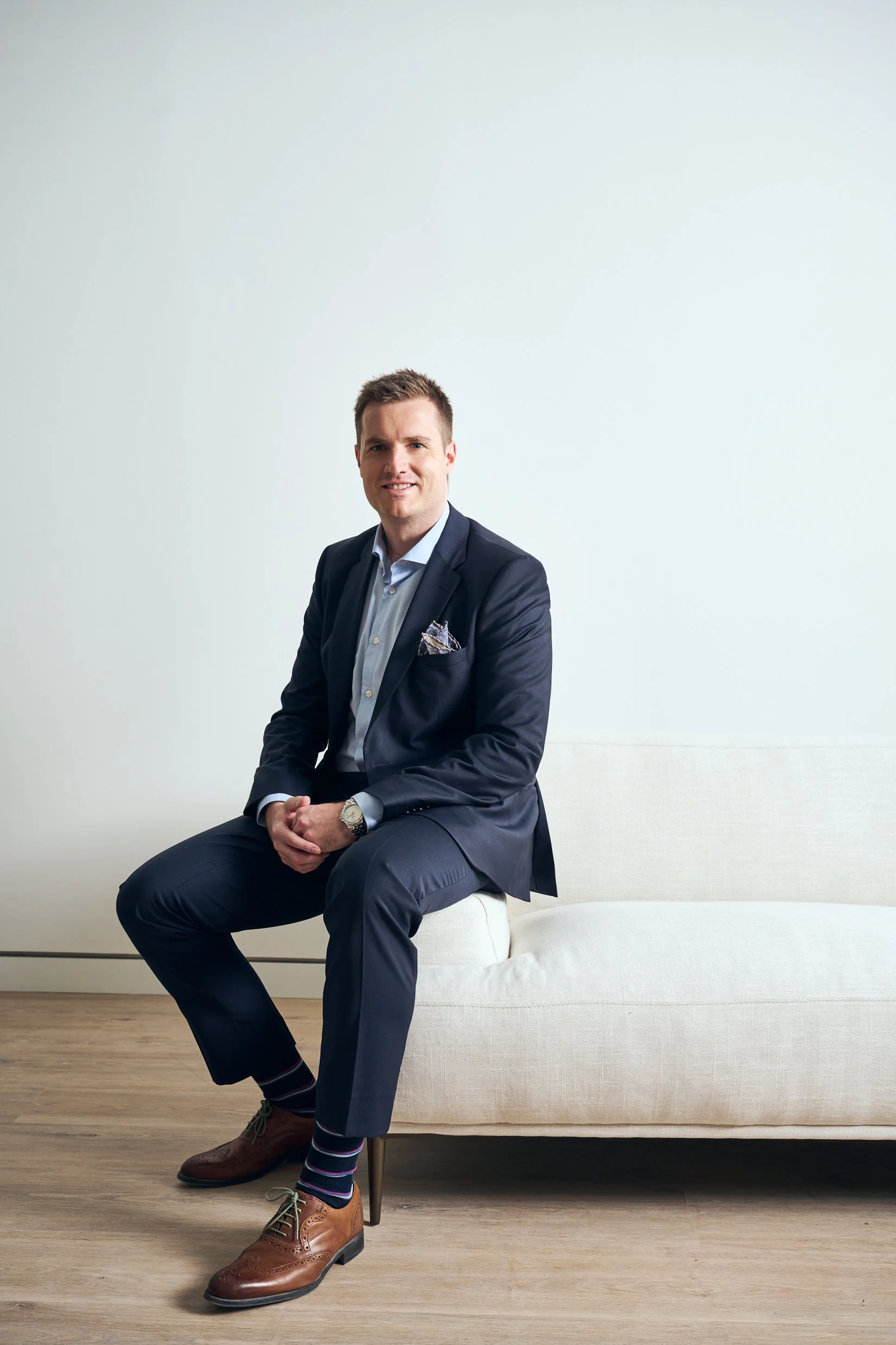
So we asked three people who see fatherhood up close what it asks of men in the UAE, and what actually helps: a psychiatrist, a wellbeing director who works with boys, and a dad who got tired of wondering where the other dads were, and started a club.
✦ The quiet number
Start with the number. A widely cited review of 43 studies and more than 28,000 fathers estimated that about one in ten experiences depression between pregnancy and a baby’s first birthday, compared with an estimated 4.8% of men in general. Rates were higher three to six months after the birth.
‘More common than most people think,’ says Dr Ash Shishodia, Consultant Psychiatrist and Medical Director at Thrive Wellbeing Centre in Dubai. It often shows up, he adds, ‘a few months after the birth, not in the first week.’ Our feature on postpartum depression made the same point from the other side: partners can develop it too.

✦ What it looks like (it’s rarely sadness)
If you’re expecting a sad dad, you may miss him. ‘In men it rarely looks like sadness,’ Dr Shishodia says. ‘It’s more often irritability, short temper, withdrawing, drinking more, or disappearing into work. Many dads don’t realise that’s what it is.’
The silence has a source. ‘Most men grow up hearing they should be the steady one, the provider,’ he explains. So when a baby arrives and everything feels overwhelming, they assume they’re meant to cope on their own. The cost is real: a dad who ends up isolated, a partner who reads the distance as him not caring, and a baby growing up around a stressed or absent parent.
‘It’s usually fear of being seen as weak that’s driving the silence, not a lack of feeling.’ Dr Ash Shishodia
In the UAE, he sees an extra layer. ‘A lot of dads here are far from their own parents and siblings, so the extended family who would normally step in simply aren’t around.’ Add long working hours, commutes and the pressure of being the main earner, and many fathers feel they have no room to struggle. ‘Some barely see their baby awake during the week. They’re present for the bills but missing the bonding, and that can leave them feeling guilty and disconnected.’
✦ A club built on stroller walks
Lukhie Songwiqi became a dad in February 2025, and went looking for other dads. ‘When I became a dad, it was the best thing that had ever happened to me,’ he says. ‘But I also realised there weren’t many obvious places for dads to meet other fathers going through the same stage of life.’ He remembers thinking, ‘Where do all the dads go?’ ‘So rather than wait for something to come along, we decided to start it ourselves.’
Dad Club DXB began as the Stroller Club: dads walking with their babies. It soon outgrew the name. ‘We wanted a club for fathers with kids of all ages, primarily newborn to 12,’ Lukhie says, so it moved into golf, fitness, outdoor adventures and family days. ‘The events are really just the vehicle; connection is the purpose.’ He says it is now approaching 800 dads.
What do dads talk about once they’re comfortable? ‘Not every conversation is deep; sometimes it’s football or taking the mickey out of each other. But as you get to know people, the conversations become more honest.’ Underneath is the same pressure Dr Shishodia describes: ‘There can be an expectation that men should have everything figured out, but most of us are learning as we go.’ Realising you’re not the only one figuring it all out, Lukhie says, ‘can make a big difference.’
The moments that stay with him are the quiet ones: dads who come to their first event alone with their baby, unsure what to expect. ‘Walking into a room where you don’t know anyone can take courage, especially as a new dad.’ His advice to a dad who is struggling quietly is gentle and practical: ‘Start small: message a mate, make plans with another dad or find a group where you feel comfortable.’ And: ‘Asking for help doesn’t make you less of a dad.’

✦ What boys are watching
Mark Samways, Director of Wellbeing at Alkalma, works with boys and meets many of their fathers. He has a simple explanation for how dads shape sons, and it has little to do with speeches. ‘Boys don’t take in much of what we tell them about being a man; they watch what the men around them actually do, and they copy it.’ Psychologists call it observational learning. A boy who sees the men in his life go quiet, get angry or disappear into work when things get hard learns that this is what coping looks like.
What he sees in those fathers is reassuring. ‘What strikes me most is how much they care.’ Many are determined not to pass on what they found hard in their own childhoods, ‘often without much of a blueprint to follow.’ And none of it has to be perfect. ‘The most powerful thing a dad can model is how to deal with imperfection: getting it wrong, owning it, and putting it right.’
His tip for this week is two words: go first. Share something that was difficult in your week, in an age-appropriate way, and how you dealt with it, then ask your son what he would have done. ‘Boys often open up more easily side by side, in the car, on a walk or while doing something together, than face to face across a table.’
✦ What actually helps
Five small things
Say it gently, somewhere calm. Something like ‘you’ve seemed really tired lately, how are you actually doing?’, over a walk or a coffee, not in the middle of an argument. (Dr Ash Shishodia)
Listen before you fix. ‘Don’t try to fix it on the spot.’ Listening, then gently suggesting he speak to someone, ‘goes a long way.’ (Dr Ash Shishodia)
Go first. Share a hard moment from your week and how you handled it. (Mark Samways)
Find your people. Message a mate, make plans with another dad, or find a group. (Lukhie Songwiqi)
Don’t wait for a crisis. ‘Seeking support doesn’t have to wait until things feel overwhelming.’ (Dr Ash Shishodia)
✦ Where to start in the UAE
Start small. Talk to someone you trust, whether that’s your partner, a friend or another dad. If you feel you need more support, consider reaching out to a clinician. Dr Shishodia’s own centre, Thrive Wellbeing Centre in Dubai, offers psychotherapy and psychiatric services, and he says support is available in over 15 languages, so fathers can talk in the language they feel most comfortable in.
The national mental support line is 800-HOPE (800 4673), by call or WhatsApp. In Abu Dhabi, 800-SAKINA (800 725462). In Dubai, Itma’en on 800 506.
Paternity leave: private-sector employees are entitled to 5 paid working days, to be taken within six months of the birth. Check with MOHRE; public-sector entitlements vary by employer.
Find your people: Dad Club DXB is free to join through its WhatsApp group, found via @dadclubdxb on Instagram, or at dadclubdxb.com.