
AI in Family Life: What UAE Parents Actually Need to Know
Not a panic piece. A practical one: where AI already sits in your child's day, what the research actually shows, and what to do about it this week.

Your child has almost certainly already used AI this week, whether you set it up or not. Not in some distant future, this week, possibly today. The question worth asking isn't whether to let AI into family life. It already is. The useful question is what to actually do about it.
✦ Where It's Already Showing Up
Three Places, Not One
Homework help: from asking a chatbot to explain a maths problem to using it to draft an entire essay.
Companionship and chat: general-purpose tools like ChatGPT and Claude, and dedicated "AI companion" apps such as Character.AI and Replika, increasingly used for conversation and emotional support, not just information.
Social apps: AI features now sit inside Snapchat, Instagram, and other platforms your child already uses daily, often without a separate download or decision point.
These three uses carry very different levels of risk, and treating them as one blob called "screen time" makes it harder to set boundaries that actually fit.
✦ What the Research Actually Shows
On homework help: a 2025 MIT Media Lab study fitted 54 participants with EEG caps and tracked their brain activity while writing essays. One group used ChatGPT, one used a search engine, one used neither. The ChatGPT group showed the weakest brain connectivity in the networks tied to memory and analytical thinking, and 83% couldn't quote a sentence from the essay they'd just written minutes earlier. Researchers called it "cognitive debt": the tool does the thinking, so the brain doesn't have to, and doesn't build the muscle it would have built otherwise. The same research found the fix isn't banning the tool. Students who wrote a first attempt on their own before bringing in AI showed stronger recall than students who started with AI and tried to internalise it afterwards. Order matters more than access.
On companionship: a nationally representative 2025 survey by Common Sense Media found 72% of US teens have used an AI companion, and 52% use one regularly. A third said the AI had said or done something that made them uncomfortable. In a related study with Stanford Medicine, researchers tested leading chatbots ( including ChatGPT, Claude, and Gemini ) for how they handled signs of teen mental health distress, and found all of them regularly missed or mishandled the warning signs. Common Sense Media's recommendation is direct: no one under 18 should use AI companions until stronger safeguards exist. Worth knowing, even if your own household lands somewhere less strict than that.
For what it's worth, most kids still know the difference. In the same survey, 80% of teens said they spend more time with real friends than their AI companion, and half said they don't fully trust what it tells them.
✦ The UAE Picture, Specifically
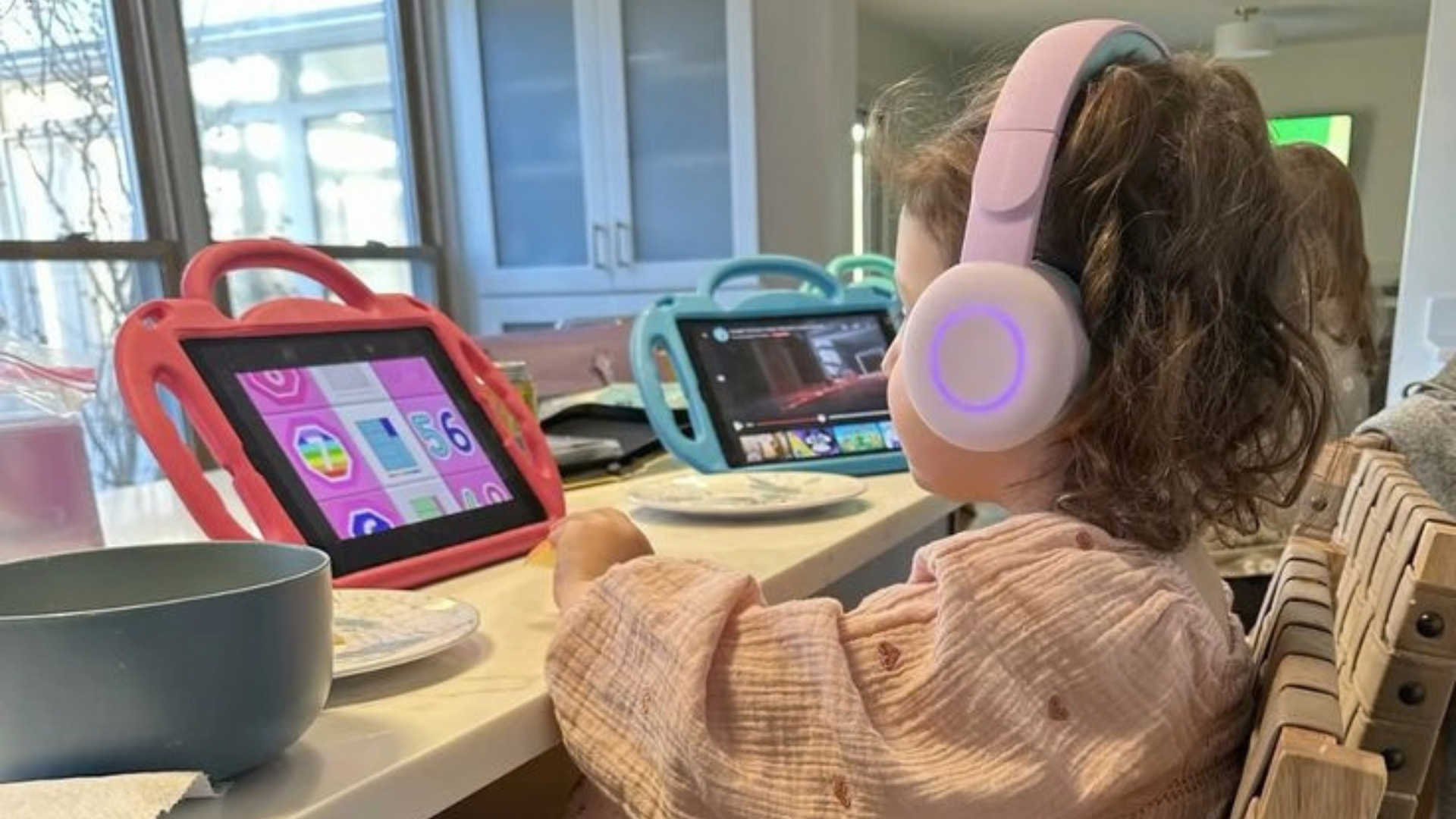
This part moves fast, and it's changed twice in the past year. In May 2025, the UAE Ministry of Education made AI a mandatory subject from KG to Grade 12 in government schools, one of the first countries to do so. Then, in February 2026, the Ministry went further with a new manual, "Safe and Responsible Use of Artificial Intelligence in Classrooms," setting out 25 specific rules. The headline one for most families: generative AI tools are now prohibited entirely for students under 13, or anyone below Grade 7. AI is also banned outright during formal exams, and older students must disclose and get approval before submitting any AI-assisted work as their own.
Private schools aren't legally bound by the same federal rules, and there's currently no single KHDA-approved list of platforms; schools are largely doing their own vetting. Some, like Dubai British School Jumeirah Park, use a traffic-light system: red for a child's own unaided work, amber for teacher-directed tools, green for supervised AI exploration. Worth asking your own school directly which colour applies to which assignment, rather than assuming.
✦ A Framework Worth Borrowing
Brain coach Jim Kwik, on a recent episode of The Jefferson Fisher Podcast, offered two five-letter frameworks that translate surprisingly well to the family table. The first, BUILD, is a sequence for before you let AI answer anything:
BUILD: Before the Prompt
Brainstorm. Have your child jot down what they already think, before AI enters the picture.
Understand. Make sure they can explain the actual question in their own words first.
Imagine. Let them attempt their own version, even a rough one.
Leverage. Now bring in the AI, to check, extend, or refine what they've already started, not to originate it.
Decide. The AI's answer isn't the final word. Theirs is.
His second framework, HUMAN, is less about AI use and more about what to deliberately protect at home: the qualities no chatbot can substitute for:
HUMAN: What to Protect at Home
Heart. Real emotional check-ins with your kids, not outsourced to a bot that's never actually worried about them.
Understanding. Encourage curiosity about how something works, not just acceptance of the answer given.
Meaning. Help your child work out what actually matters to them. A chatbot can't hand them a sense of purpose.
Adaptability. Model being wrong and adjusting, out loud, as a family. The willingness to unlearn is not something AI can practise for them.
Nexus. Protect real connection deliberately: family dinners, friend time, community. These are the things AI companionship quietly competes with.
✦ A Few Sensible Boundaries to Set This Week.

Practical, Not Punitive
Ask, don't confiscate. The American Academy of Pediatrics recommends a calm, curious opening: "How are you using AI? Can you show me how it works?", rather than leading with a ban.
Look at chats together occasionally, the same way you might glance at any other conversation happening in your home.
Set one hard privacy rule: no passwords, addresses, school schedules, or photos go into any AI tool, ever. Simple enough for a seven-year-old to repeat back to you.
Check your child's school's actual policy on AI use per subject and per assignment. Don't assume it matches what you read here, since practice varies school to school.
Watch for withdrawal, not just usage. A teen who prefers a chatbot to friends, or gets defensive about a chat history, is a stronger signal than time spent alone.
None of this requires becoming an AI expert overnight, or removing the technology from your household. It requires roughly the same thing every other part of parenting does: staying curious, asking direct questions, and deciding deliberately rather than by default.
This article reflects publicly available research and UAE government policy accurate at the time of writing. AI regulations, school policies, and platform features change quickly, confirm current rules with your child's specific school before assuming they apply.